
What Is Non-Point Source Pollution?
Non-point source pollution is one of the most persistent threats to water quality in Connecticut. Unlike pollution from a single pipe or discharge point, non-point source pollution comes from many everyday activities across a watershed. When it rains or snow melts, runoff carries nutrients, bacteria, sediment, and other pollutants from streets, parking lots, lawns, and agricultural areas into local waterways.
Stormwater runoff is the primary driver. Water flowing into storm drains often travels untreated directly to rivers, lakes, and coastal waters. Over time, this runoff degrades habitat, increases flooding risks, and impairs water quality.
How Green Infrastructure Reduces Stormwater Pollution
Communities across Connecticut are turning to green infrastructure to manage stormwater more effectively and reduce non-point source pollution at its source. These solutions slow, treat, and infiltrate runoff before it reaches surface waters.
Examples of green stormwater infrastructure include:
- Rain gardens that capture and filter runoff
- Curb bump outs designed to intercept street drainage
- Tree wells that absorb stormwater while improving urban canopy
- Enhanced stormwater systems that reduce sediment and nutrient loading
Visuals such as water flowing into storm drains, rain gardens in action, and streetscape improvements help illustrate how these solutions work in real-world settings.
BSC Group’s Stormwater Project Experience in Connecticut
BSC has extensive experience supporting Connecticut municipalities, agencies, and organizations with stormwater planning, design, and implementation projects. Our team understands the regulatory landscape, local watershed conditions, and funding opportunities that make projects both effective and feasible.
We have supported projects focused on:
- Improved stormwater runoff management
- Habitat restoration and water quality enhancement
- Green infrastructure integration into capital improvement programs
- Watershed-based planning and implementation
Our approach emphasizes practical, cost-effective solutions that deliver measurable environmental benefits while aligning with community goals.
Connecticut DEEP Section 319 Grant Opportunity
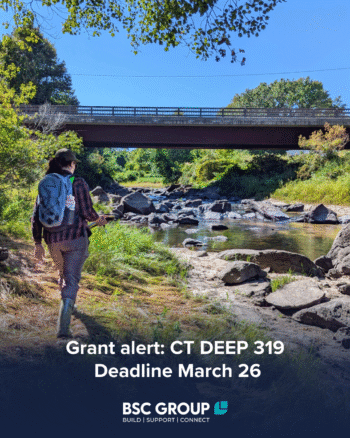
The Connecticut Department of Energy and Environmental Protection is currently accepting applications for the Section 319 Non-Point Source Pollution Management Grant Program. Applications are due March 26.
Key details include:
- Approximately $1.1 million in grant funding is available statewide
- Awards commonly range from $150,000 to $350,000, though smaller or larger awards may be considered
- Eligible projects address nutrients, bacteria, and sediment
- Example implementation projects include habitat improvement, dam removal, enhanced stormwater management, and improved agricultural practices
- Projects required solely to meet stormwater permit mandates are not eligible, but projects that exceed permit requirements may be considered
- Proposals may build upon ongoing or planned capital projects, including those incorporating green stormwater infrastructure
Learn more about the CT DEEP 319 Grant Program here:
https://portal.ct.gov/deep/water/nps/request-for-proposals-for-nonpoint-source-management-grant-program
Partner With BSC Group
If your community or organization is considering a stormwater or green infrastructure project in Connecticut, BSC can help you plan, design, and pursue funding for solutions that improve water quality and resilience.
For more details or support, contact Tabitha Wilson, AICP, LEED AP twilson@bscgroup.com.